
By MARCUS STEAD
I’m sure most of you will agree with me that the sitcom Porridge is as funny now as it was when it first aired in the 1970s.
Opinions are split as to whether its successor, Going Straight, reaches the same heights. I, personally think it does.
For those who aren’t familiar with Going Straight, the pretext is that Fletcher, played by the wonderful Ronnie Barker, has completed his prison sentence, and he begins a new chapter of his life living with his daughter, Ingrid (Patricia Brake) and son Raymond (Nicholas Lyndhurst) at the family home in Muswell Hill (then a far more affordable place for a regular family to live than it is today).
The series focuses on Fletcher’s struggles to readjust to the outside world, the difficulties he has in finding work as an ex-con, the temptation to fall back into the world of crime, and of a Britain that has changed considerably during the three years, eight months and four days he was in prison. Fletcher walked free from prison into a Britain of strikes and high inflation.
Much is made of Ingrid’s relationship with Fletcher’s former cellmate Lennie Godber (Richard Beckinsale), of which Fletcher initially has reservations, but he eventually comes to accept it.
OUR POLITICAL CLASS FEARS FREEDOM AND RESPONSIBILITY
What does any of this have to do with the tenth anniversary of Brexit? Well, there is a scene in the first episode of Going Straight where a big comparison can be made.
Fletcher says his goodbyes to his fellow prisoners, and before leaving, he goes to the prison storage area where the personal belongings he arrived with are returned to him.
Prior to walking through the prison doors into freedom, the guard tells him that it’s not uncommon for freed prisoners to bang on the door to be allowed back in, because they cannot cope with freedom.
Fletcher assures the guard that it won’t happen to him, and that he was keen to get out and move on with his life. The prison doors open, and Fletcher steps outside to take in the fresh air. The guard says that he is supposed to see him walk off the premises because some prisoners want to be allowed back in, but Fletcher says that he’d really like to hear the door slam shut behind him before he leaves.
The guard reluctantly agrees and does as Fletcher requests. Fletcher tries to walk away, but he soon realises his coat is jammed in the gaps between the doors, and he can’t pull it out. So yes, he desperately bangs on the door for it to be reopened, but not for the reason the guard thought.

There is a direct comparison to be made between that scene in Going Straight and the British political establishment’s attitude to Brexit. Like the freed prisoner that cannot cope with the freedoms and flexibilities of the outside world, the British political classes cannot cope with the combination of freedom and responsibility that being outside the EU brings.
They are, at best, desperate to avoid that responsibility, and at worst, eager to nudge Britain back into the EU. The responsibility is too much for our modern-day political class.
MAKE NO MISTAKE – THE EU IS IN DECLINE
Let’s dispel a few myths. The EU of 2026 is not some land of milk and honey. Yes, when the UK joined what was then the EEC (Common Market) in 1973, Western Europe was a success story, and the UK was a basket case. That is certainly not the situation as it stands today.
The main EU economies are stagnant, and in some cases, including Germany and Italy, are growing even more slowly than the UK. The idea that by throwing our lot in with them we will become an economic powerhouse is ludicrous.

This is 2026. We live in a world where the USA innovates, China imitates…and the EU regulates.
To put the sheer scale of the EU’s decline into perspective, in the year 2000, around half of the 25 biggest companies in the world had EU headquarters. Today, there are only two (LVMH and Novo Nordisk).
There is no EU-based equivalent of Apple, Meta, Microsoft or Amazon. 20 years ago, the EU accounted for 30% of global GDP. Today, that figure stands at less than 20%.
Going beyond that, according to the list published by The Times, the UK has five universities in the world’s Top 30, and many more in the Top 100. Only the USA has more. The EU only has ONE in the Top 30, and even that’s only just – Munich occupies 30th place.
SIR KEIR IS NO FRIEND OF BREXIT, BUT HE’S NOT AFRAID TO USE ITS FREEDOMS WHEN IT SUITS HIM
Where does the soon-to-be ex-Prime Minister, Sir Keir Starmer, fit into all this? Well, he is instinctively pro-EU – with his downright weird background in Pabloism, he is likely to be sympathetic to the Eurocommunist ideas and mindset of the EU. This is a man who voted to block Brexit 48 times in the House of Commons before he became Prime Minister.
During his time as Shadow Brexit Secretary, Sir Keir repeatedly voted against allowing a “No Deal” Brexit. I, too, was opposed to a “No Deal” Brexit, but for the reasons the late and much-missed Christopher Booker outlined in his Sunday Telegraph columns, namely that so much of our trading would have no legal basis without a deal. My favoured approach was a Norway-style arrangement – outside the EU, inside the Single Market and outside the Customs Union. I have written plenty about this elsewhere.
Sir Keir wasn’t motivated by such concerns. He was keen to block Brexit by any means available to him. By trying to prevent a “No Deal” Brexit, he effectively wanted to send Boris Johnson’s negotiators in, unable to walk away, and thereby incentivising the EU to offer us the worst deal possible. As anyone who has ever done a successful business deal on any level knows, the option to walk away in the event of a bad deal being offered is vital.
But hold on a moment. The current Labour government has been willing to use the freedoms and flexibilities Brexit offers when it suits itself to do so. Boris Johnson’s Conservative government rightly removed VAT on sanitary products for women in January 2021. That wouldn’t have been possible under EU law.
Less desirably, the current Labour government put 20% VAT on private school fees in an act of socialist spite. That, too, wouldn’t have been possible if the UK was still inside the EU. Current Conservative leader Kemi Badenoch described England’s Education Secretary Bridget Phillipson as a ‘spiteful class warrior’ at PMQs last week. I was using the term ‘spiteful’ to describe the VAT on private school fees long before that.
The reality is that the super-rich won’t be much affected by the move. Those affected by the tax are middle class parents who sacrifice holidays and the latest gadgets to save their children from substandard comprehensive schools. Most of the people who are vociferously disapproving of Mrs Badenoch’s language are the same ones who happily call Reform supporters “racist” and the Tories “scum”.

Let’s not forget that in recent years, the current Justice Secretary, David Lammy, described Brexiteer Tory MPs as “worse than Nazis” and said of Nigel Farage, “I will leave it for the public to come to their own judgments about someone who once flirted with Hitler Youth when he was younger.”
When Mr Lammy’s accusation was proved to be baseless, he did not apologise.
Home Secretary Shabana Mahmood once accused Nigel Farage of being ‘worse than racist’ while she was at a fringe event at Labour Conference.
The foul-mouthed Angela Rayner, who is likely to return to the cabinet when the unremarkable Andrew Burnham becomes Prime Minister a few weeks from now, said of the Conservatives during a 2021 speech: “We cannot get any worse than a bunch of scum, homophobic, racist, misogynistic, absolute vile … banana republic, vile, nasty, Etonian … piece of scum,” before adding that she had “held back a little”.
Such language from the left is nothing new. In 2010, the then-Labour Whip David Wright called Tories ‘scum suckling pigs’ on social media.
On 4 July 1948, the day before the NHS was launched, the overrated Aneurin Bevan gave a speech in Manchester where he said of the Conservatives: “So far as I am concerned they are lower than vermin.”
Let’s not have any lectures about Mrs Badenoch’s choice of words from the left.
But back to Sir Keir Starmer’s true attitudes towards Brexit, one of his few redeeming qualities is his enthusiasm for making Britain an Artificial Intelligence (AI) powerhouse in the years ahead.
In March 2024, the EU Parliament adopted the EU AI Act. It seeks to ensure that AI systems will: “respect human dignity and autonomy; operate with a clear, predictable legal framework; and support democratic values.”
All those words sound very nice, but in reality, a bureaucratic approach to regulation has seen the EU fall way, way behind the USA and China, condemning it to being AI backwater.
By comparison, the UK is an AI powerhouse, behind only the USA and China. In March 2026, the outgoing Chancellor, Rachel Reeves, argued for increasing alignment with EU rules and greater development of AI in Britain. Nobody seemed to tell her she can have one or the other – but not both.
THE EU IS NEITHER KIND NOR BENEVOLANT
One of the most unpleasant aspects of the last ten years has been the way a certain section of British society has never accepted the result of the referendum.
It became noticeable at breakfast time on the morning after the result became known. The worst offenders, by far, belonged to the cosmopolitan classes who are normally quick to portray themselves as tolerant, sophisticated and cosmopolitan in outlook.
They immediately claimed foul play from the Leave campaign, while completely ignoring (or should that be “conveniently forgetting”?) the Remain campaign’s “Project Fear”?
For those of you who need reminding of how it went, we had the then-President of the USA, Barack Obama, telling the UK we would have to go to the “back of the queue” if we wanted a trade deal with the country he led (so much for a “special relationship”.

Beyond that, the then-Chancellor, George Osborne, said there would need to be an “Emergency Budget” if the country voted to Leave the EU (it didn’t happen).
The then-President of the European Council, Donald Tusk, who is now Prime Minister of Poland, said that Brexit would bring the end of Western civilisation.
The then-Governor of the Bank of England, Mark Carney, who is now Prime Minister of Canada, said that Brexit would lead to a spike in inflation. That did not happen. The increase in inflation happened some years after the Brexit vote due to a gross overreaction by governments in Britain and abroad to the Covid virus.
The section of society that has never truly accepted the result of the referendum congregates around a select group of sneering, deeply unpleasant individuals who actively undermine this country and want Brexit to fail. One example is LBC radio’s mid-morning presenter, James O’Brien, a playground bully who isn’t fit to lick the boots of others who’ve presented in the same timeslot over the years, from Brian Hayes to Richard Littlejohn.

Others who the “Remoaners” congregate around include Gary Lineker, Andrew Adonis, Jolyon Maugham, and, worst of all, Alastair Campbell.
Yes, New Labour’s thug-in-chief, he of the 2003 “dodgy dossier” has received a full rehabilitation from the chattering classes because of his unwillingness to accept Brexit. They don’t care about how his behaviour led to the deaths of British service personnel and thousands of innocent Iraqis. They don’t care about his yobbish, menacing behaviour towards Alex Phillips on Newsnight. No, he is now their poster boy. As far as they’re concerned, all is forgiven.
What else do these types like about the EU? Maybe it’s the EU-backed revolution in Ukraine in 2014 that saw an unlovely, but lawfully elected, non-aligned government led by President Viktor Yanukovych overthrown by an unconstitutional pro-NATO regime. A substantial number of those involved could fairly be described as Nazi-sympathising thugs.
Or maybe they like the EU’s “Troika” spending restrictions in Greece in 2015, that led to much unnecessary economic misery and political instability in the country.
Maybe it’s post-2000 Italy that they admire, where the economy barely grew in two decades because membership of the euro meant that Italian exports were priced too highly. In May 2018, the Italian President, Sergio Mattarella, moved way beyond the ceremonial role normally associated with his position when he effectively dismissed a coalition government consisting of the Lega Nord and Five Star movement. Mattarella blocked the new government’s choice of Finance Minister (Paolo Savona) because he was too critical of the European Union and the euro, citing a supposed piece of the constitution which prevents Italy leaving the euro.
Perhaps they like the fact that the European Union’s top court fined Italy €8.5 million in 2020 for its failure to recoup illegal state aid that had been provided to the hotel and tourism sector in Sardinia. They did so at a time when the Italian government was fighting the pandemic.
Maybe it’s Romania they admire, where a candidate who looked as though he was going to win the presidential election (Calin Georgescu) was banned from standing last year?
Maybe it’s France they like, where a woman who looked as though she was a challenger to President Macron (Marine Le Pen) was banned from public office and given a suspended prison sentence?
Or maybe it’s Germany they admire, where in late 2024, a parliament was thrown out by the people and a new one elected, but in the period after the election before the new one could take over, the old one made vast borrowing commitments to fund the Ukraine war, effectively binding its successor?
The most likely scenario is that the Remoaners are unconcerned with all of these things. They are mere inconveniences to be ignored. To them, the EU means the ability to treat the continent as a playground that is there for their convenience – holidays, food, wine, monuments and art galleries that they can inspect for their approval.
They are largely insulated from the negative impacts of uncontrolled mass immigration, including wage suppression due to an oversupply of cheap labour, pressures on the housing market and problems with social cohesion. To them, free movement means cheap nannies and cheap waiters for them to enjoy.
WHERE DO WE GO FROM HERE?
Let’s get one thing out of the way – Andrew Burnham is not going to solve the nation’s ills. He and Sir Keir Starmer don’t disagree on anything important.

The same people who were getting excited by Sir Keir two years ago are now telling us that everything will be alright once we swap him for Mr Burnham.
Does any serious, thoughtful person really believe this guff? Is Mr Burnham the man who will get to grips with Britain’s spiralling welfare bill? The government spends more on welfare (not including pensions) than it receives in income tax revenues. That means everything else, from the NHS to education to defence, has to be paid for by other means.
The government also spends more on debt interest payments than it does on defence. Notice I said debt INTEREST payments, not “debt repayments”.
A few weeks ago, the Defence Secretary, John Healey, a mild-mannered and intelligent man, resigned from his post the day before a major announcement was due on defence policy because he believed Sir Keir wasn’t giving him the money he needed to do what was required to keep the country safe. This is serious stuff. This, from a government that gave huge pay rises to already well-paid train drivers, among other things.
Mr Burnham will not put an end to “Net Zero” quackery, nor will he properly get to grips with uncontrolled mass immigration. You can be sure public sector pay demands will become a big issue in the months ahead, and he’s unlikely to have the courage to tell them “no”.
Mr Burnham has expressed a desire for Britain to rejoin the EU in the long term, so he is hardly likely to see Brexit as an opportunity to be seized. Essentially, he is a puppet of the globalist agenda. He has no meaningful professional experience outside politics, having worked in political circles for his entire adult life. The calibre of person around him will be little better. There is hardly a wealth of talent on the Labour benches, and the civil service has been damaged by the reforms implemented during the Blair era.
So, what about the alternatives? Kemi Badenoch has improved massively as a House of Commons performer, and she makes a lot of the “right noises” nowadays. But the reality is that she was part of the Conservative government machinery between 2010-2024 that failed to put a stop to uncontrolled mass immigration, endorsed the ECHR and pretty much behaved like a continuation of the New Labour project for a lot of the time.
As a colleague, Mrs Badenoch long had a reputation for being rude, arrogant, entitled and highly disorganised. Yes, she has grown into the job, and may well have matured as a person in recent years, but while she’s talking a lot of sense these days, it contrasts massively with the policies she endorsed and help implement while in government.
Now here comes the bit a lot of people won’t like me saying…
NIGEL FARAGE AND REFORM HAVE PROBABLY PEAKED
Those of us who have had the misfortune to know Nigel Farage personally understand what his weaknesses are. I speak from experience on this. As a young adult, I was an active member of UKIP between the spring of 2003 and late 2006.
Mr Farage is a superb, charismatic public speaker and debater. But that is where his talents begin and end.
In the summer of 2004, UKIP did very well in the elections to the European Parliament, and in the months that followed, there was a serious opportunity to “scale up” the party into a credible opposition that could ultimately replace the Conservative Party.
But UKIP blew it, and by the end of 2006, it was too late. The problem was that UKIP could never decide whether it wanted to be a political party or a pressure group, and as a result, it became neither.
By taking the “pressure group” approach, they could have cast a wide net in appealing to Eurosceptics from across the political spectrum. Being opposed to Britain’s membership of the EU has never been a “left or right” issue.
The greatest ever speech made against the EEC/EC/EU project in this country was made by the then-Labour leader Hugh Gaitskell in 1962. At the 1975 referendum, most of the best speeches against continued EEC membership were made by Labour figures – Tony Benn, Peter Shore, Michael Foot and Barbara Castle. The tradition continued into the 2016 referendum with the excellent work done by Gisela Stuart, Graham Stringer, Kate Hoey and George Galloway.
Leftists have often been opposed to the EEC/EC/EU project for its lack of democracy and accountability, and of the damage its policies and regulations do to the British working class.
Around the time of the 2004 European elections, UKIP hired Dick Morris, a high-profile former political adviser to the White House during the Bill Clinton era, to professionalise its operations. Mr Morris said that the party should use the analogy of spokes in a wheel to attract a broad church. Essentially, the argument was that each spoke represented a problem in Britain, whether it’s the Common Agricultural Policy, or free movement of people or whatever, and it led to the centre of the wheel, which represented the EU.

In short, the argument he wanted UKIP to forward was that for however long we’re ruled by the EU, it doesn’t matter which party forms the government in Westminster, because whatever you want, you cannot have. For the EU isn’t a single issue, all other issues flow from it.
The party didn’t really listen to Mr Morris, and his involvement ended in around 2005.
The second approach was to develop the party with a full set of policies on everything from health to education to the environment. By doing so, you inevitably alienate some Eurosceptics. Go for left-wing policies, and you alienate those on the right, adopt right-wing policies, and you alienate those on the left.
UKIP took neither approach, and the party’s website, and election leaflet literature, consisted of a badly worded mishmash of simplistic policies. The late and much-missed radio phone-in host Mike Dickin once described the UKIP website on air as though it was “written by a sixth-form college student on speed”. That was about right.
Although Mr Farage did not become UKIP leader until September 2006, his influence during the previous period was considerable, even though the party was led by former Conservative MP Roger Knapman, who I rather liked as a person, but he lacked the skillset and charisma to be an effective leader. He and Mr Farage couldn’t stand each other.
When it became clear Mr Farage would soon become leader, he set about starting rumours and discrediting his rivals. He also refused to delegate and professionalise the operation. By the winter of 2006, it was too late, and the party was not fit to make a serious impact beyond European parliamentary elections. They barely featured as a serious force at the 2010 general election, even though the Conservatives ran a bad campaign and failed to gain an overall majority when it was there for the taking.
The basic story of UKIP was that every few years, a new batch of people would either become UKIP MEPs or rise to near the top of the party in other ways. They would then fall out with Mr Farage, there would be a split, and the party would go backwards. Malicious rumour-spreading by Mr Farage’s cabal, combined with his philandering and drinking and other lifestyle habits would put people right off. The academic and blogger, Dr Richard North, is a good example of someone who quit working for Mr Farage because he was sick of putting him into the back of taxis when drunk in the early hours of the morning.
The point is this – history is now repeating itself with Reform UK. As with UKIP 20 years earlier, no other poppy is allowed to grow too tall with Mr Farage. He regards people of ability like Rupert Lowe, Ben Habib and others as a threat to his power. Malicious rumours and false information about them soon follows.
As a result, Reform UK hasn’t professionalised. By this stage, they should have a set of credible, fully costed policies and a “front bench in waiting” ready to sort out the country’s many ills.
Instead, Reform UK is not fulfilling even its basic duties in the local councils it controls. The Reform-controlled Warwickshire County Council is led by 19-year-old George Finch. I don’t claim to know him – he may well be a very nice and very capable young man, but at 19, he will not have the life experience, wisdom or nous to be an effective leader.
Beyond that, Reform councils have given us plenty of splits, stories of oddballs and cranks. Importantly, they haven’t grasped that even at local council level, the modern-day civil service will be dominated by the lanyard-wearing woke classes who will do their utmost to try and sabotage Reform’s policies. Their councillors were unprepared for that challenge and did not have a strategy in place to deal with it.
People are noticing that Reform are making a mess of things. At a national level, Reform led the polls throughout 2025, and in the latter part of the year, there were occasions when it was as high as 35%, taking it into overall majority territory.
But here we are, in mid-2026, and it more often hovers around the 25-28% range, still ahead of other parties, but some way short of an overall majority. A recent poll put Reform on 24%, only five points ahead of Labour.
Reform made huge gains in May’s local elections, but its performance compared to last year was weaker – the party got just under 35% of the vote compared to the figure of 41% in the 2025 local elections.
Frankly, at two key by-elections this year, in Gorton and Makerfield, Reform UK underperformed. They chose the wrong candidate on both occasions. In the period since the latter by-election that paved the way for Mr Burnham’s return to Westminster, Mr Farage gave a series of excruciating interviews where he provided shifty and contradictory answers as to an undeclared £5 million ‘gift’ from a British cryptocurrency billionaire based in Thailand. He didn’t even properly explain what the money was for.
At 62, Mr Farage’s risky lifestyle may be taking its toll. He is thinner than he was even a few months ago and has aged considerably. It may yet be a rough patch that he gets through and bounces back from, but his character remains unchanged from the boozy control freak I knew two decades ago.
WHERE ELSE CAN WE GO?
Look, I like the Restore Britain leader Rupert Lowe. He has a lengthy track record as a successful businessman, he donates his monthly MP’s salary to local charities and worthy causes in his Great Yarmouth constituency, he is a straight talker, he isn’t afraid to make enemies and his important work in exposing the scale of Pakistani Muslim grooming gangs is to be commended (let’s not call them “Asian” as though they’re from Thailand, Malaysia or Japan – they are Pakistani Muslims and we should say as much). The report he published makes for grim and sobering reading. The sheer scale of the abuse was extraordinary.
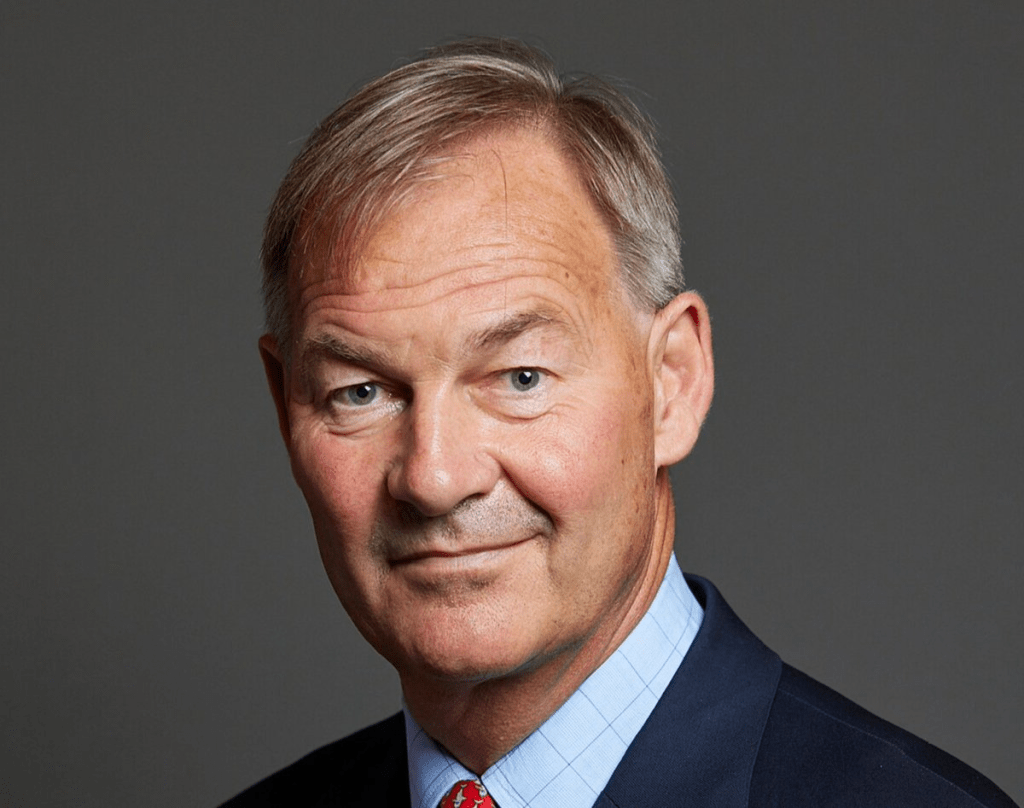
Mr Lowe was very much a victim of no poppy being allowed to grow too tall under Mr Farage. The usual false rumours and malicious information followed, and that led to his departure from Reform UK. His criticisms of the party in the period since have been fair and accurate.
The reason I have not actively endorsed Restore Britain is because I am concerned that his party has left itself open to attracting Tommy Robinson’s hangers on. It is vulnerable to entryism and “scaling up” the party will be hard. While Mr Lowe says many, many things I agree with on social media, the party is “light on policy” at the moment. This may change. I wish him well.
The party that most impresses me at the current time is the SDP. You may well be surprised that it still exists. The long-and-short of it is that the original SDP merged with the Liberal Party in 1988 to form the Liberal Democrats, but the SDP’s former leader, Dr David Owen, two other MPs and a minority of party activists formed a breakaway group also called the Social Democratic Party immediately afterwards. That continuing party dissolved itself in the aftermath of a by-election in Bootle, in which the party’s candidate received fewer votes than Screaming Lord Sutch’s Official Monster Raving Loony Party. However, some SDP activists met and voted to continue the party in defiance of its National Executive, leading to the creation in 1990 of the SDP under the leadership of the candidate who lost that by-election. The 1990 incarnation of the party has existed ever since.
Today, the party’s website contains a detailed manifesto and set of policies that I can endorse around 95% of. The disagreements I have are on matters of detail. Their leader, William Clouston, is a man of considerable intellect.
Ideologically, the party is wholly committed to Brexit. It blends social democratic economic policies with cultural conservatism, advocating a mixed-based social market economy.
The SDP supports a broad welfare state, public ownership of railways and utilities, lower economic inequality, and raising defence spending to 2.5% of GDP. The party supports the reintroduction of grammar schools, a more selective education system, abolition of the BBC licence fee, stronger criminal sentencing, and the establishment of a National Care Service to organise and fund social care. It advocates for civic nationalism, an end to uncontrolled mass immigration, withdrawal from the European Court of Human Rights, the Council of Europe, and the 1951 United Nations refugee convention.
All of this gets a very big “well done” from me. What’s the problem? Well, the big question is about “scaling up” the party without succumbing to splits and entryism. How do you successfully turn a train set into a train line? It is no easy task.
Beyond that, the possible replacements for the current two “main” parties aren’t very attractive. The Green Party under Zack Polanski’s entire raison d’être is based on a problem that doesn’t exist, namely a belief that climate change is caused by mankind, is doing immense damage to “the planet” and we need to completely transform the way we live, at enormous expense to ourselves, to prevent it. Essentially, they’re just another set of puppets working for the globalist agenda. Beyond that, they’re big on identity politics, giving puberty blockers to children, legalising hard drugs, running down our armed forces and other cranky stuff, like wanting to abolish private landlords. Oh, and they’re pro-EU. Sensible people should give them a wide berth.
The sarcastically-named Liberal Democrats are essentially dominated by Labour party refugees from the original SDP breakaway in the 1980s and their successors. It wasn’t immediately obvious during the 1990s under the leadership of the former Liberal, Paddy Ashdown, but nowadays it’s more clearly the case. Traditional liberalism in the mould of Jo Grimmond has been lost to mainstream British politics (though a small-scale Eurosceptic Liberal Party still exists to this day). And let’s not forget that however much Sir Edward Davey likes to make a clown of himself by dancing and singing silly songs, he was the Postal Affairs Minister between 2010-2012 when the Horizon IT Post Office scandal was unravelling. His initial refusal to meet, and then believe the principled, tenacious campaigner Sir Alan Bates suggests Sir Edward has very poor judgement. And yes, the Lib Dems are also pro-EU globalists and pushers of the man-made climate change agenda.
THE EU IS INCREASINGLY A LAND OF EXTREMISM AND CHAOS
I’ve probably already said enough about how the EU isn’t a land of paradise, but from a political perspective, the problems of their old, long-established parties collapsing is just as prevalent, and in some cases even more severe than in Britain.
In France, the political “middle ground” is all but disappearing, with public support largely split between what gets called the “far right” National Rally and the left-wing New Popular Front. I am instinctively wary of the term “far right” these days, as it is often used to describe anyone who believes in controlled borders and that a woman cannot have a penis. The current Italian Prime Minister, Giorgia Meloni, was described by the achingly woke BBC as “far right” prior to her election in 2022. I see little evidence that she is anything other than a mainstream right-leaning leader.

In Germany, the not-very-nice AfD, also called “far right”, frequently tops the polls, and moves are well underway by the German establishment to try and ban it.
Many other EU countries are experiencing similar seismic shifts away from the traditional “centre ground”.
Much of the enormous shift in political opinion throughout Europe can be attributed to the huge waves of migration from northern Africa that have utterly transformed the demographics of many towns and cities since 2010.
The destabilisation was caused by Barack Obama and David Cameron backing the “Arab Spring”, which led to mass chaos that continues to this day. Their support had little to do with concerns over human rights in the countries involved, and everything to do with Libyan leader Colonel Gaddafi’s plans to create an African single currency, which was opposed by the Saudis and regarded as a threat to the dominance of the US dollar.
With the news cameras having long since moved on, Libya is effectively three separate countries. The sea crossings into Europe from the coast of Libya and elsewhere continue apace, and European leaders do not know how to stop it. We know little of those coming – their intentions, their criminal convictions, and their attitudes towards everything from the rights of women to road safety. It’s no wonder people are looking beyond the political mainstream for solutions.
CONCLUSION
The will of the British people was clearly expressed in the 2016 referendum. They wanted to leave the European Union, by a clear, though not massive majority.
The problem was that by Brexiting when we did, in the way we did, we “put the cart before the horse”.
To put it another way, we took a dangerous shortcut. The entire process and aftermath would have been far smoother and more successful if we had first of all elected a government that was committed to leaving the European Union, believed in Brexit, delivered Brexit and then took advantage of the opportunities it brought.
Instead, we’ve endured years of heel-dragging, cynical and devious attempts by our political class and the civil service to stop Brexit from happening.
At best, our political classes have regarded Brexit as a damage limitation exercise, rather than as an opportunity to be seized.
Sir Keir Starmer, while keen on the freedoms Brexit brings in the few key areas where it suits him, has nevertheless led a government that has tried to undo Brexit one policy at a time, keen as he is to appease his globalist masters.
Make no mistake, the freedoms of Brexit present an opportunity to reshape the country’s economy for the better, but we need to deregulate.
Much was made by the Remain campaign prior to the 2016 referendum of how Brexit would lead to Britain becoming “Singapore-on-Thames”.
Why would that be a problem? Singapore is an innovative, highly educated, “get up and go”, self-reliant economy fit for the 21st century. It is a country to be learned from, not to be sneered at.

There’s something really important about modern-day economic and employment policy that doesn’t get talked about enough: big, multinational corporations are very often IN FAVOUR of enhanced workers’ rights, a “National Living Wage” that is far higher in real terms than it was 20 years ago, “day one” employment rights and so on.
The big corporations can absorb the costs, but they know full-well that their smaller rivals cannot.
We need a government that is a friend to the entrepreneur and the small businessman, and that means deregulating and taking advantage of the freedoms Brexit brings.
To borrow an example from Singapore, the government could target an area of high unemployment and draw a square on a map. Anyone who starts a business that employs more than, say, 50 people in that area would pay no VAT or business rates for five years.
That’s the sort of thing Singapore did, and it’s something we in Britain should copy. It’s a win-win situation. Individuals are in jobs and paying taxes rather than sitting at home claiming benefits, would-be entrepreneurs are motivated to launch new businesses, and companies, whether established or newcomers, are encouraged to invest in the communities, employ and “skill up” the workforce, and with a pro-business environment, they are likely to stay well beyond the five years once the tax incentives are in place.
Such incentives would be illegal under EU law, but it’s perfectly possible for Britain to implement now we are outside the bloc.
The changes needed require a government with vision and ambition. Where is such a government going to come from?

